Few experiences test the faith of a Latter-day Saint parent like watching a child walk away from the Church. Whether your son or daughter has quietly drifted away, openly questioned their beliefs, or made a decisive break — the heartache is real, and the questions can feel overwhelming.
What did I do wrong? Will they come back? What does this mean for our family's eternal future?
These are some of the most deeply personal questions members bring to their study, their prayers, and their conversations with bishops and friends. Here's what prophets, apostles, and the scriptures offer.
Love Is Never the Wrong Answer
The single most consistent message from Church leaders on this topic is clear: never stop loving your child. Your relationship with them is not contingent on their church activity.
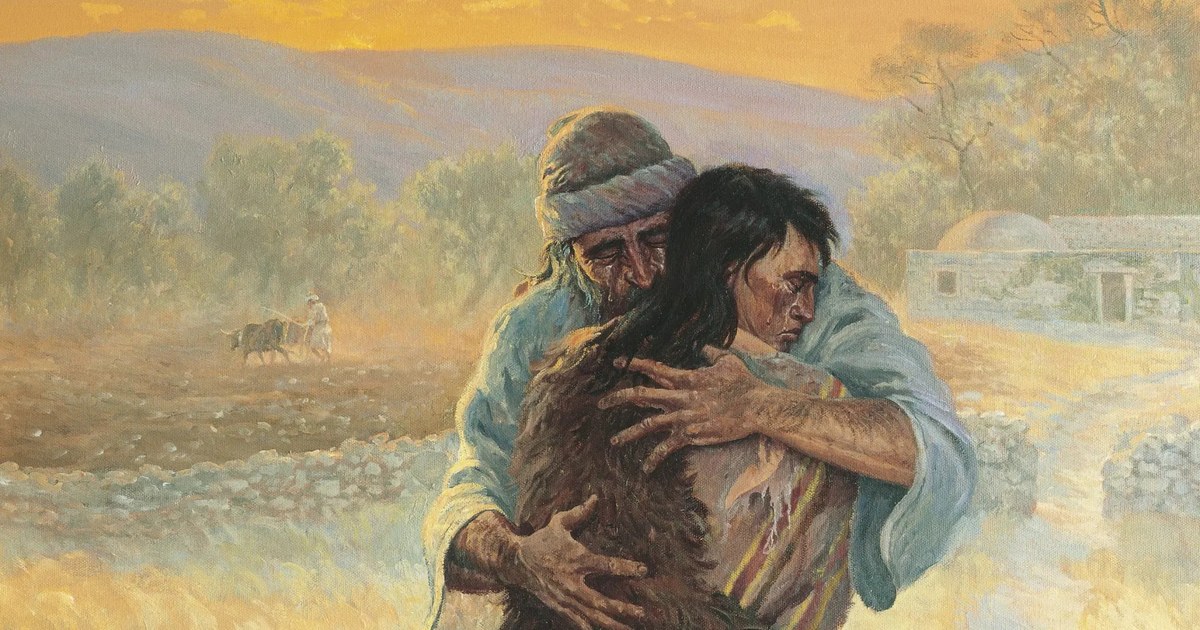
Elder Dieter F. Uchtdorf spoke directly to this in his October 2023 General Conference address, teaching that God's response to a child who strays is not anger or rejection: "Our Heavenly Father will run to us, His heart overflowing with love and compassion. … Though choices may have taken you far away from the Savior and His Church, the Master Healer stands at the road that leads home, welcoming you" ("The Prodigal and the Road That Leads Home," General Conference, October 2023).
President Russell M. Nelson has repeatedly emphasized that God's love for His children does not diminish when they make choices that diverge from gospel standards. And the Savior's parable of the prodigal son (Luke 15:11–32) illustrates the Father's response to a returning child: not anger, not punishment, but open arms.
What the Prophets Have Taught
Several prophets and apostles have spoken directly to parents in this situation:
President James E. Faust shared the well-known words of Elder Orson F. Whitney, who recounted a promise attributed to the Prophet Joseph Smith: "The Prophet Joseph Smith declared — and he never taught a more comforting doctrine — that the eternal sealings of faithful parents and the divine promises made to them for valiant service in the Cause of Truth, would save not only themselves, but likewise their posterity. Though some of the sheep may wander, the eye of the Shepherd is upon them, and sooner or later they will feel the tentacles of Divine Providence reaching out after them and drawing them back to the fold. Either in this life or the life to come, they will return. They will have to pay their debt to justice; they will suffer for their sins; and may tread a thorny path; but if it leads them at last, like the penitent Prodigal, to a loving and forgiving father's heart and home, the painful experience will not have been in vain. Pray for your careless and disobedient children; hold on to them with your faith. Hope on, trust on, till you see the salvation of God" ("Dear Are the Sheep That Have Wandered," General Conference, April 2003). These words have given generations of parents real hope — though as Elder David A. Bednar has carefully noted, they should be understood alongside the principles of individual agency and personal accountability for sin.
Elder Jeffrey R. Holland spoke words that reach every brokenhearted parent: "To any who may be struggling to see that light and find that hope, I say: Hold on. Keep trying. God loves you. Things will improve. Christ comes to you in His 'more excellent ministry' with a future of 'better promises.' He is your 'high priest of good things to come'" ("An High Priest of Good Things to Come," General Conference, October 1999).
Elder David A. Bednar addressed this topic directly in a landmark 2014 Ensign article. He acknowledged that "one of the greatest heartaches a valiant parent in Zion can suffer is a child who strays from the gospel path" and then carefully examined how prophetic promises about the sealing power relate to the doctrine of moral agency. His key insight: these teachings offer genuine hope, but "the interpretation of these statements by some members of the Church has contributed to a measure of doctrinal misunderstanding" when they are read as overriding individual accountability. In other words, the sealing covenant is a source of real, sustaining hope — but it does not eliminate a child's need to eventually choose Christ for themselves ("Faithful Parents and Wayward Children: Sustaining Hope While Overcoming Misunderstanding," Ensign, March 2014).
What About Temple Covenants and Sealings?
This is one of the most common questions parents ask, and the doctrine offers real comfort. Temple sealings are eternal in nature, and the sealing power is not easily broken.
The scriptures teach that "all covenants, contracts, bonds, obligations, oaths, vows, performances, connections, associations, or expectations, that are not made and entered into and sealed by the Holy Spirit of promise ... have an end when men are dead" (D&C 132:7). But the converse is also true: sealings that are sealed by the Holy Spirit of Promise carry eternal power.
President Boyd K. Packer taught: "The measure of our success as parents ... will not rest solely on how our children turn out. That judgment would be just only if we could raise our families in a perfect world" ("Our Moral Environment," General Conference, April 1992). He also taught that the sealing ordinance has a "long reach" and that faithful parents who keep their covenants have great reason for hope.
The ultimate details of how this works are in the Lord's hands. What is clear is that the sealing power is real, your temple covenants matter, and God honors the faithfulness of parents.
Practical Counsel
Beyond the doctrinal framework, here is what Church leaders and experienced counselors consistently recommend:
- Keep the door open. Make your home a place your child wants to visit. Don't let church activity become the only topic of conversation.
- Respect their agency. The plan of salvation is built on agency. You cannot force faith, and attempts to do so often push children further away.
- Don't stop inviting — but don't pressure. A gentle "You're always welcome to come with us" is very different from weekly guilt trips.
- Seek to understand. Ask questions with genuine curiosity. Many children leave not because they don't believe, but because they felt unseen, unheard, or hurt.
- Take care of your own faith. Your spiritual wellbeing matters. Continue to attend the temple, pray, study, and serve. Your faith doesn't depend on their choices.
- Get support. Talk to your bishop, a trusted friend, or a professional counselor. You don't have to carry this alone.
There Is Always Hope
The Lord's timing is not our timing. Many members who leave the Church do eventually return — sometimes years or decades later. And for those who don't, the doctrines of the spirit world (see the companion article on repentance after death) and the sealing covenant offer continued hope.
Your child is still God's child. He knows them, loves them, and is working in their lives in ways you may not see. Your job is to keep loving, keep praying, and keep your own covenant path steady.
Study What the Prophets Have Taught
Iron Rod AI can help you find specific teachings from prophets and apostles about families, agency, temple covenants, and hope — all verified by LDS TruthLock™ for doctrinal accuracy.
Try Iron Rod AI Free