Tuesday was loud with teaching — parables, warnings, prophecies, the Mount of Olives, the end of the world pressed into a single day. And then Wednesday arrives, and the Gospels go almost silent.
Not quiet because nothing mattered. Quiet because the next thing that mattered couldn't be argued into existence.
Somewhere in the middle of plots and pressure, while leaders calculated how to arrest Him "by craft," one unnamed woman walked into a room in Bethany carrying a jar that could have changed her life financially—and she broke it without hesitation.
Mark frames the moment with a chilling contrast: conspiracy, then consecration; betrayal, then devotion. The chief priests are looking for a way to take Jesus without a riot. Judas is looking for a price. And this woman is looking only at Him (Mark 14:1–11).
The Jar That Broke the Room Open
Mark says she came with "an alabaster box of ointment of spikenard very precious," and she "brake the box" and poured it on His head (Mark 14:3).
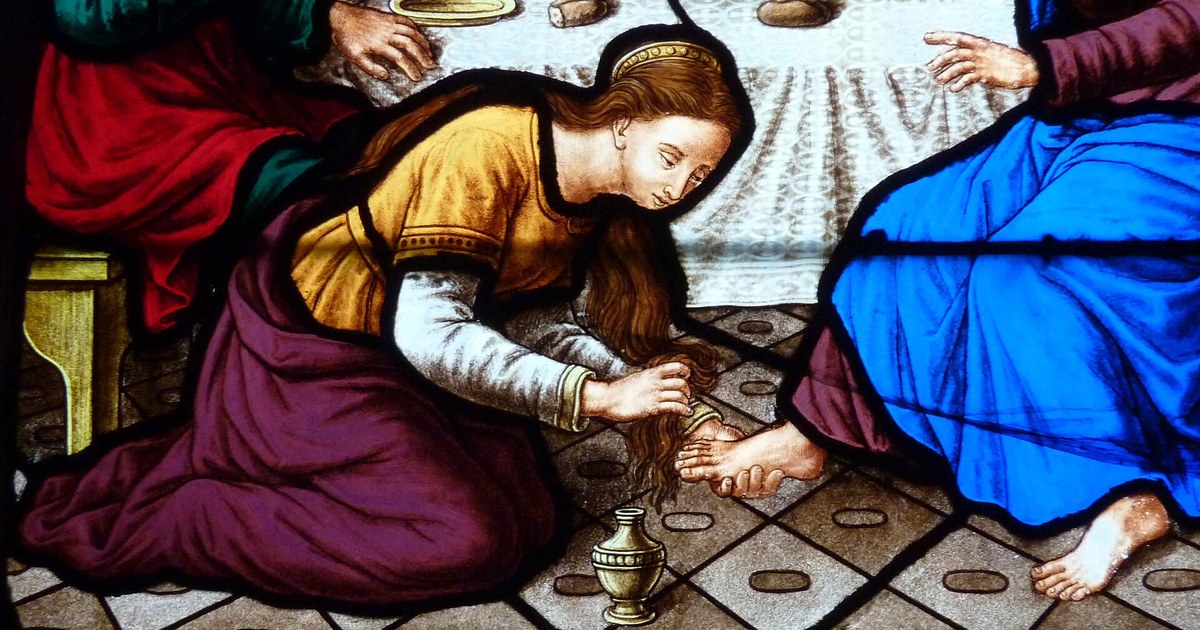
John adds details that make the scene even more personal: it was Mary; the oil went on His feet; she wiped them with her hair; and "the house was filled with the odour of the ointment" (John 12:3).
That last line matters. The fragrance didn't stay private. It spread. Everyone had to breathe it. Everyone had to react to it. Devotion like this always fills the room. It forces a decision: Is this beautiful—or is it too much?
When Devotion Gets Criticized as "Waste"
Some people in the room did not call it worship. They called it waste:
"Why was this waste of the ointment made?" (Mark 14:4)
They even had numbers ready. It could have been sold "for more than three hundred pence" and given to the poor (Mark 14:5).
John identifies the loudest critic: Judas. And then John tells you why Judas cared—because he didn't. "This he said, not that he cared for the poor; but because he was a thief, and had the bag, and bare what was put therein" (John 12:6).
That detail is devastating: Judas can speak fluent "concern for the poor" while his heart is already elsewhere. Sometimes the most spiritual-sounding objection is just a mask for something darker. Wednesday exposes that.
Jesus Defends Her (and Explains Her)
Jesus stops the criticism immediately:
"Let her alone; why trouble ye her? she hath wrought a good work on me." (Mark 14:6)
Then He says something that sounds, at first, almost startling: "For ye have the poor with you always, and whensoever ye will ye may do them good: but me ye have not always" (Mark 14:7).
He is not dismissing the poor. He is clarifying time. There would be endless opportunities to give bread. But there would only be a few remaining hours to give this—love offered directly to Him before the cross, devotion poured out while He was still reachable in mortality.
And then He interprets her act in a way that turns the whole room silent: "She is come aforehand to anoint my body to the burying" (Mark 14:8).
In other words: she understood something the Twelve were still resisting. She acted as if His death was real and near. She treated Him like Someone about to be taken away.
"She Hath Done What She Could"
This may be the most tender sentence in the entire week:
"She hath done what she could." (Mark 14:8)
Not: She did what others did. Not: She did what was efficient. Not: She did what was explainable.
She did what she could.
Wednesday is for people who are not sure they have enough—enough time, enough strength, enough capacity, enough emotional bandwidth, enough money, enough faith. The Savior does not measure her by what she held back. He measures her by what she offered. He calls it "a good work."
The Scent That Outlasted the Betrayal
Right after this scene, Mark tells you Judas goes to the chief priests "to betray him," and they promise him money (Mark 14:10–11).
That's not accidental placement. Mark wants you to feel the contrast: one disciple breaks what is precious to honor Jesus; another disciple sells what is precious—Jesus Himself—for silver.
And here is the strange, quiet hope of Wednesday: the betrayal happened in secret corridors, but the devotion filled the whole house. The fragrance spread. The memory stayed. Jesus promised it would:
"Wheresoever this gospel shall be preached throughout the whole world, this also that she hath done shall be spoken of for a memorial of her." (Mark 14:9)
Judas's deal was temporary. Her worship became scripture.
What Wednesday Asks of Us
Wednesday of Holy Week is not about being dramatic. It is about being devoted—especially when devotion is misunderstood.
It is about refusing to let a calculating world tell you that love for Jesus Christ is "waste."
It is about doing what you can, while you can, because "me ye have not always" (Mark 14:7).
Tomorrow the basin and towel will appear. The bread will break. The cup will pass. Gethsemane will begin. But today—Wednesday—Holy Week pauses long enough to show you what real discipleship looks like when it isn't efficient, when it isn't applauded, when it doesn't fit anyone's spreadsheet.
It looks like a woman with a jar, a room filled with fragrance, and a Savior who says, with unmistakable tenderness: "She hath wrought a good work on me" (Mark 14:6).
Art Credit: "Mary Magdalene anoints the feet of Jesus," stained glass, Église Saint-Pierre, Dreux, France (1880). Photo by GFreihalter, CC BY-SA 3.0, via Wikimedia Commons